

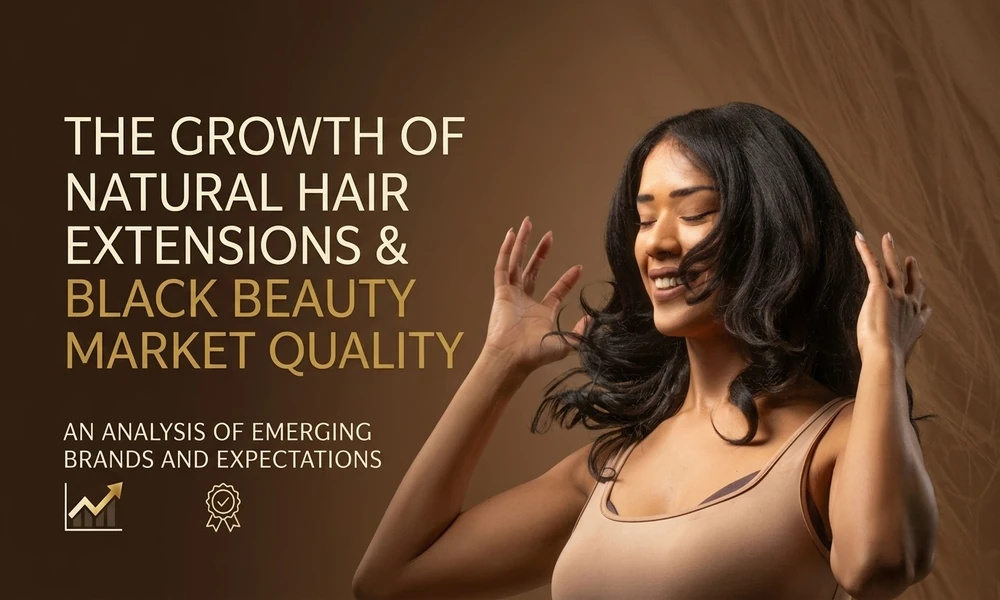
The Black beauty market has always been shaped by creativity, cultural knowledge, and a deep understanding of how personal hair choices connect to identity. But in recent years, the growth of texture-focused hair extension companies has revealed something bigger than a product trend. Customers are asking sharper questions, comparing brands more carefully, and expecting hair that respects the reality of natural, relaxed, blown-out, curly, coily, and kinky-straight textures. For business owners, this shift is important because it shows that quality is no longer a luxury detail. It is becoming the foundation of brand trust, repeat sales, and long-term positioning in the premium hair extensions space.
Texture Expertise Is Becoming a Quality Standard
Textured and natural hair shoppers are leading a more educated conversation about what premium extensions should look and feel like. The growth ofNatural Hair Extensions Brands shows that customers want companies that understand real density, realistic curl patterns, believable fullness, and the difference between hair that simply looks good online and hair that blends beautifully in everyday life.
This matters because Black women are not shopping only for length or volume. They are looking for hair that supports personal style without forcing them to hide their own texture. A bundle, wig, closure, or clip-in must do more than arrive neatly packaged. It should answer practical questions: Will it blend? Will it last? Will it move naturally? Will it hold up after washing, styling, and daily wear?
Customers Are Comparing Brands Beyond Price
One of the clearest signs of a stronger market is the way buyers now evaluate value. Price still matters, but it is no longer the only deciding factor. Many shoppers are willing to invest more when a brand can show consistency, clear product education, honest photos, helpful reviews, and hair that performs well after the first install.
For premium beauty businesses, this means product positioning has to be built around proof, not vague claims. Texture accuracy, softness, minimal shedding, realistic density, and durability all influence whether a customer returns. When customers search for textured hair that can mimic a natural blowout or blend with coarse-straight strands, terms likeBest Kinky Straight Hair Bundles often reflect a buyer who is comparing long-term value, not making a quick beauty purchase.
Brands that understand this shift usually focus on details such as:
- clear texture descriptions that match real customer expectations
- before-and-after visuals that show natural blending
- care guidance that supports longer wear
- customer service teams that understand textured hair concerns
- reviews that speak to quality, softness, fullness, and longevity
Black Women Are Raising the Standard for Premium Hair
The rise of natural-texture extension companies also says a lot about who is influencing the market. Black women are not passive consumers in this category. They are trendsetters, business owners, stylists, reviewers, educators, and repeat buyers who know when a product has been designed with their needs in mind.
This influence is pushing the industry away from generic “one texture fits all” marketing. Customers want more precise options for relaxed textures, blown-out textures, kinky-straight finishes, soft curls, tight curls, coils, and protective styles. They also want businesses to understand the emotional side of hair shopping: the need for confidence, representation, and products that feel culturally informed instead of copied from a trend.
For Black-owned hair companies and Black women entrepreneurs, this creates a meaningful opportunity. Brands that combine product knowledge with authentic market understanding can compete on trust, not just advertising spend. They can build loyalty by explaining textures clearly, showing realistic results, and creating product lines that reflect how Black women actually wear their hair.
Quality Is Now a Business Advantage
In a crowded beauty space, quality is one of the strongest ways a brand can separate itself. Customers have seen enough overly processed hair, misleading photos, vague sourcing claims, and textures that fail to match the product description. As a result, they are more cautious, but also more loyal when a brand proves itself.
That loyalty can become a serious business advantage. A customer who trusts the hair quality is more likely to return for a different length, recommend the brand to a stylist, leave a detailed review, or share results on social media. In this way, better products do more than improve customer satisfaction. They help lower acquisition costs, strengthen brand reputation, and create organic credibility.
Quality also affects how a company can position itself. A premium brand does not have to compete only through discounts when it can show why its hair is worth the investment. Better texture development, careful sourcing, responsive service, and long-term wear education all support stronger pricing power and a more sustainable business model.
Strategic Takeaways
The growth of texture-focused hair extension businesses reflects a larger change in the Black beauty market. Customers are demanding more than beauty promises. They want evidence, expertise, representation, and products that understand the diversity of textured hair. That demand is pushing brands to be more thoughtful, more transparent, and more consistent.
For business owners, the message is clear: the future of the premium hair extensions market belongs to companies that treat texture knowledge as a core business skill. Brands that invest in realistic blending, dependable quality, honest education, and culturally aware product development will be better positioned to earn trust and grow. In a market shaped by highly informed Black beauty consumers, quality is not just a product feature. It is the business strategy.