

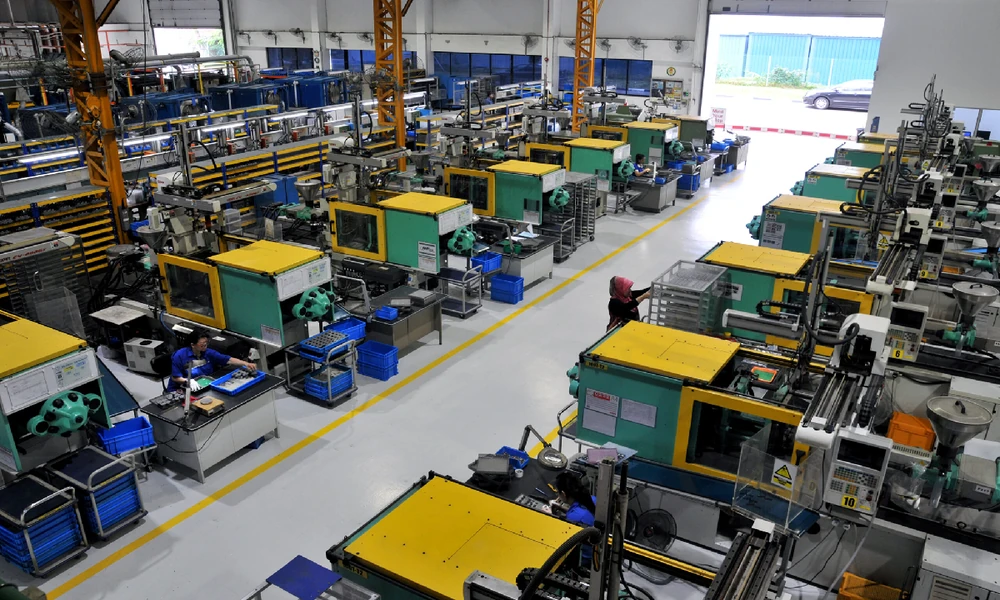
The challenge facing engineers who need small, complex metal components in high volumes is not new. Traditional machining produces the precision but struggles with the geometric complexity and unit cost at scale. Die casting handles volume well but cannot achieve the fine tolerances that precision applications demand, and it is limited in the alloy range it can accommodate. AMT metal injection molding occupies a different point in this design space: it combines the material properties of wrought metal with the geometric freedom of injection moulding, enabling the production of complex near-net-shape components that machining would struggle to produce economically and casting could not match for tolerance.
AMT, operating from Singapore with a manufacturing base and capability in precision metalwork, provides metal injection moulding services for industrial, medical, automotive, and electronics customers who need components that cannot be efficiently made any other way.
What Metal Injection Moulding Is
Metal injection moulding, abbreviated as MIM, is a powder metallurgy process that begins with a feedstock, a mixture of fine metal powder and a thermoplastic binder system. This feedstock is injection-moulded into the shape of the desired component, producing a “green part” that has the geometry of the final component but is oversized to account for the shrinkage that occurs in subsequent processing.
The green part undergoes debinding, which removes the binder system either thermally, chemically, or through solvent extraction depending on the binder type. The resulting “brown part” is then sintered in a high-temperature furnace, where the metal particles fuse to produce a fully dense metal component with the mechanical properties characteristic of the alloy.
AMT metal injection molding produces components in a range of alloys including stainless steels, tool steels, low alloy steels, titanium alloys, and special alloys for specific application requirements. The alloy selection determines the mechanical, corrosion, and biocompatibility properties of the final component.
The Geometric Advantage
The geometric freedom that MIM provides is the defining reason engineers choose it over alternative processes for many component designs. Features that would require multiple machining setups or EDM to produce can be formed in a single MIM operation: internal channels, undercuts, threaded features, thin walls, and complex external geometries are all routinely produced by MIM.
For medical device applications, where components often have intricate geometric requirements driven by the device’s functional design rather than manufacturing convenience, this geometric freedom is the central capability that makes MIM the enabling technology.
Tolerances and Post-Processing
MIM produces components with dimensional tolerances in the range of plus or minus 0.3 to 0.5 percent of the nominal dimension, which is achievable across the component without the localised precision limitations of casting. For critical dimensions that require tighter tolerances, secondary machining operations can be applied to specific features after sintering.
Surface finish from the MIM process is typically in the range of Ra 1.6 to 3.2 micrometres, which is sufficient for many applications and can be improved to Ra 0.4 micrometres or better through secondary polishing or grinding operations.
AMT’s process capability is documented through the dimensional control data collected during production, providing customers with the statistical evidence of conformance to specification that medical and aerospace customers in particular require.
Applications Across Industries
AMT’s precision MIM components serve customers across medical devices, where the biocompatibility and corrosion resistance of stainless steel and titanium MIM parts are essential; automotive components, where the strength and wear resistance of alloy steel MIM parts at high volume justify the tooling investment; and industrial and electronics applications where complex geometries in functional alloys are required.
For engineers evaluating whether MIM is appropriate for a specific component, the qualifying criteria are component complexity that makes machining expensive, alloy requirements that cannot be met by die casting, and volume requirements that justify the tooling investment.
For manufacturers looking for AMT metal injection molding capability to produce precision complex components in functional alloys at competitive cost, AMT provides the technical expertise, process control infrastructure, and quality documentation that advanced industrial and medical customers require from a metal injection moulding partner.