

It only takes a moment for a garbage truck coming off the alley just before sunrise to occupy most of the space between the two sides of a narrow passage. Even if its back-up alarm is sounding, a van parked too far into the alley, a full recycling bin, or a hedge growing beside the sidewalk could conceal a cyclist, car or someone on foot. When a crash does take place in one of these stops, information about how the truck got there can be just as relevant as the damage you see on a crumpled bumper.
These accidents pose different legal issues because the truck will stop at many houses in a row. The truck’s employees might be getting in and out of the vehicle, pushing heavy containers across slippery surfaces, or signaling to the driver to avoid a tree limb. It will be necessary to determine exactly what took place in order to establish liability.
Investigating How the Truck Was Moving
For example, a truck might be backing out of an alley into the street. Marks from the truck scraping the asphalt on a driveway, a broken taillight, or the location of a blue recycling bin might tell you the angle at which the truck was facing when the accident occurred. You will want to document the general scene and get photos of the damaged cars, the obstructed mirrors, and any debris.
Garbage truck backing out of a narrow residential alley
The data recorded by the truck might be relevant. The GPS system on the truck can document when the vehicle arrived on the street, how long it spent there, and when it moved again after the accident. Video recorded by a backup camera can show whether anyone was behind the truck or whether one of the truck’s employees was near the back steps. Backup cameras can sometimes delete their recordings automatically, so it is important to request them immediately.
Other records that might be helpful include:
- Testimony from the truck’s crew about hand signals used, the alarm on the back-up camera, and the positions of the workers on the truck.
- Records documenting any maintenance issues the truck had, such as a dirty backup camera or a broken sensor on the rear of the truck.
- Records documenting the truck’s regular maintenance, including repairs to its brakes, mirrors, warning lights, or back-up camera.
- Dispatch records for the truck showing where the truck was supposed to go, or whether it deviated from its regular route.
One piece of evidence alone is rarely enough to establish all of the events that led up to the accident. For example, GPS coordinates (dig this) of where the truck stopped near the alley might be corroborated by the timestamps on the backup camera footage and photographs of skid marks in a driveway.
When the Garbage Truck Drives Off
In another scenario, you might be driving past a garbage truck that has stopped on the street to empty the trash cans. The garbage truck might suddenly start driving away from the curb as the workers are closing the back of the garbage truck with a metal lock. In Evanston commercial vehicle accident claims, it might be relevant to know whether the truck driver used his turn signal, checked his mirrors, drove the proper distance away from the curb before moving forward, or whether the truck crossed into the other lane while the driver was looking away.
The garbage truck’s schedule might be relevant in establishing timing. If the truck’s route says it was supposed to be on your street at 6:18 am, and a doorbell camera shows the headlights driving past the gate on your property at 6:19 am, that video evidence might disappear if it gets overwritten in accordance with the camera’s storage limits. All that would remain would be the notification that your phone received.
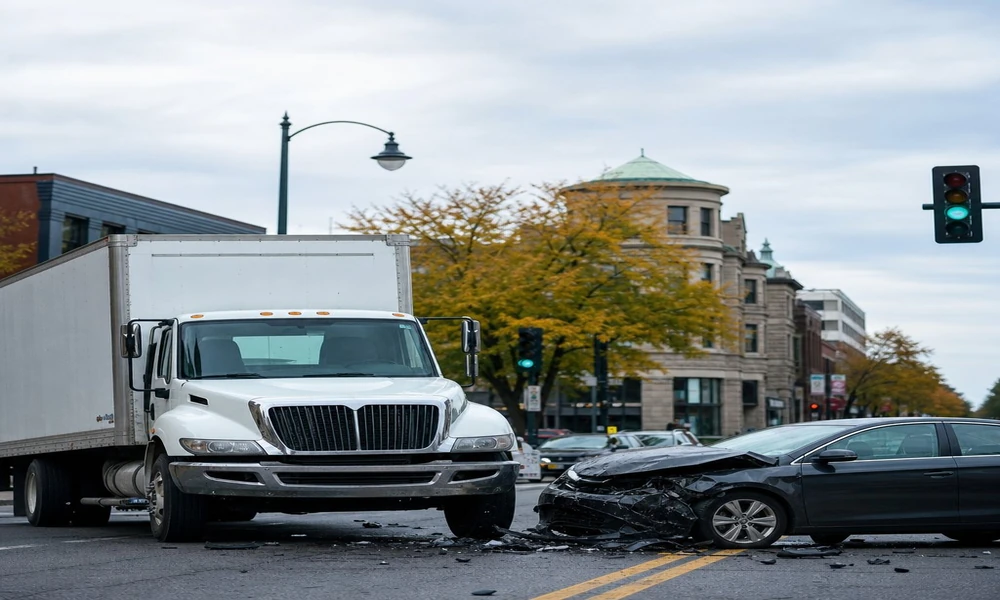
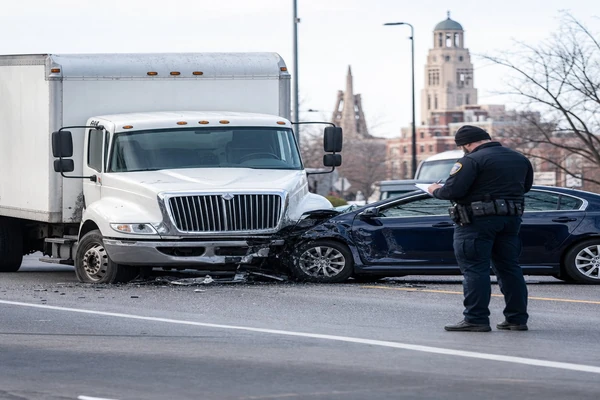
Vehicle damage and roadside debris after a garbage truck collision
Determining Liability
Liability might fall on someone other than the driver of the garbage truck. The garbage trucks that come to your house in Evanston might belong to the City of Evanston, a private company that the City contracted to do the work, a subcontractor hired by the private company, or a combination of these entities. The contract between the city and the private company might govern who owns the trucks, who employs and supervises the drivers, who maintains the vehicles, who is required to carry insurance, and who is responsible for delivering trash to certain locations, with the full details at https://epa.gov/facts-and-figures-about-materials-waste-and-recycling.
Preserving the Evidence While It Still Exists
In a garbage truck accident, evidence can disappear after the next truck makes its pickup. Skid marks get washed away, trash cans are taken back inside, and a security camera above a porch light will overwrite footage of the morning’s events. Preserving data regarding the truck’s route, any video footage, the truck’s maintenance records, contracts, and statements made by the crew right after the accident will increase the likelihood that the physical evidence from the accident can still be examined.