

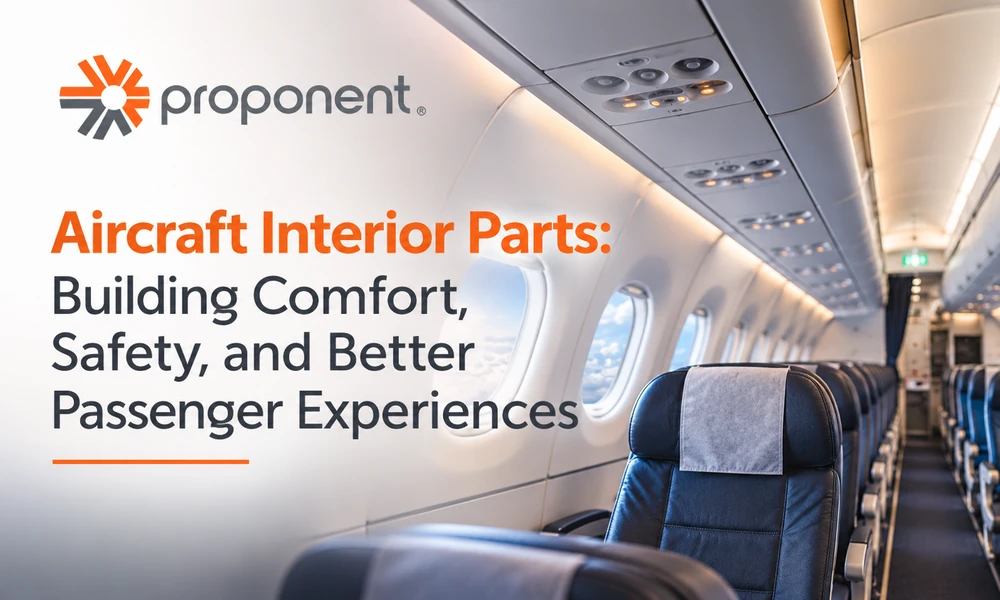
A successful trip on an airplane begins well in advance of the flight. Customers will notice the cleanliness of the seat, the design of the cabin and how convenient it is to find a place for their belongings. All three aspects rely upon top quality aircraft interior parts which enhance comfort, safety and day-to-day operation.
From seat frames to overhead bin components, every element of an airplane contributes to providing passengers with a smooth and reliable flight experience.
What Makes Up an Aircraft Interior?
With having to meet stringent safety requirements, each of the numerous individual aircraft interior parts which comprise the interior of an airplane has a specific purpose.
Following are the most common aircraft interior parts:
- Passenger seats: Provide comfort, as well as support during the flight.
- Overhead bins: Used to store carry-on bags, also it is able to keep the cabin organized.
- Cabin panels: Cover walls as well as ceilings and at the same time help reduce noise.
- Flooring and carpets: Keep cabin floors safe and are used to improve appearance.
- Interior lighting: The design of aircraft allows for passengers to navigate their way through the cabin with safety, but also provide a visually appealing, as well as comfortable space for passengers to sit.
- Galley and lavatory components: Support crew tasks, as well as passenger needs.
These aircraft interior parts must fit the design of the aircraft and be able to withstand frequent use.
Why Quality Matters in Cabin Components?
The interior of an airplane is used consistently by all passengers who sit in the cabin. The overhead bins are opened and closed every time there is a flight. Additionally, the cabin panel system must endure pressure changes, frequent cleaning, and vibrations.
Poor-quality components will lead to numerous repair cycles, a longer period of time required to perform routine maintenance procedures, and a larger amount of money spent on such procedures. On the other hand, durable aircraft interior components provide airlines with the ability to meet cabin standards while reducing the frequency of replacing the components.
Additionally, safety is of equal importance. Fire, smoke, and toxicity requirements apply to materials used in the construction process. All of the components that make up the finished product must undergo testing and approval prior to being utilized as part of the overall design.
Choosing the Right Parts for Your Fleet
Airlines and repair facilities require parts which are compatible with their aircraft types and how they operate. Inaccurate components could result in delays for services or regulatory issues.
Fit and Compatibility
Check part numbers, aircraft specifications, and approved configurations.
Material and Durability
The material selected must be able to withstand wear and tear, be easy to keep clean, and meet all safety standards as required by the aviation industry.
Supply and Availability
When you have reliable suppliers, it helps minimize your down-time by having the parts delivered when they are needed for your maintenance team.
Certification and Traceability
Verify that all parts received contain appropriate documentation and have come from acceptable suppliers.
Better Interiors, Better Flights
Quality aircraft interiors will result in an improved passenger experience and allow the airline to operate more efficiently. Airlines have the ability to provide passengers with a safe, comfortable and functional cabin environment that they can use during each flight.
Using quality parts that come from trusted manufacturers will allow airlines to provide a superior level of service inside the airplane cabin, control repair expenses, and decrease delays.