

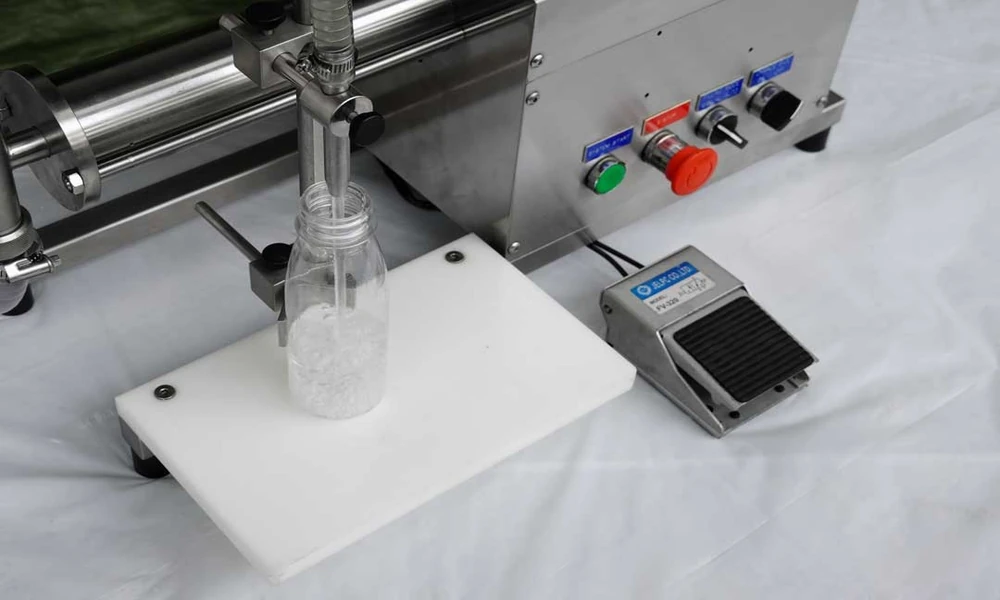
Brochures end at the purchase order. The more revealing part of buying a liquid filling machine singapore begins some weeks later, when a crate is lowered onto the factory floor and five working days follow in which the machine either becomes part of the line or becomes a problem. Walking through that week in advance, day by day, shows what a production manager on this island should settle before the order is placed, when changes are still cheap.
Before Monday: The Floor Itself
Industrial space here is costly and frequently upstairs. Check the goods lift dimensions and floor loading against the crated machine, not the machine alone, and confirm the route from loading bay to line. Mark the footprint in tape, including room to open guards, pull out a pump and stand a pallet. Confirm what the machine consumes: three-phase supply, compressed air at a stated pressure and dryness, perhaps chilled water. Each missing utility costs a day.
Monday: Uncrating and Positioning
The crate is opened and checked for transit damage against the packing list while the delivery driver is still present. The frame is moved into place, levelled on its feet and anchored if the design calls for it. Conveyors are aligned to the upstream and downstream equipment by height and centreline. It is dull work, and it decides whether containers pass smoothly between machines or catch on a five-millimetre step for the next ten years.
Tuesday: Power, Air and Signals
Electricians connect supply and earth; fitters connect air. The supplier’s engineer powers up and checks each motor direction, sensor and emergency stop in turn. If the filler must exchange signals with a capper, labeller or upstream tank, those links are wired and tested now. Humidity is high all year, so ask how the electrical cabinet is sealed and whether compressed air needs drying, since condensation in pneumatic valves is a common cause of erratic dosing.
Wednesday: Water First, Then Product
Trials start with water because spills are harmless. Nozzle heights, fill volumes and conveyor timing are roughed in. Then the real product is introduced, and the settings change, because nothing behaves like water. This is the day the value of dealing with a locally based filling line builder becomes obvious: an engineer who can stay late, fetch a different nozzle from a nearby workshop and return in the morning is worth more than a video call across time zones.
Thursday: Accuracy and Speed Runs
With product flowing, the team runs each container size at target speed and weighs a sample from every nozzle. Results are compared with the tolerances written into the contract. Expect adjustment; that is the purpose of the day. Record the final settings as recipes in the controller so that they can be recalled by name. Also time a full changeover between two products, including cleaning, since short runs of many variants are typical of local manufacturers.
Friday: Training and Handover
Operators, not just engineers, should run the machine on the last day. They start it, stop it, clear a jam, change a format and clean it, with the supplier watching. Maintenance staff are shown lubrication points, wear parts and how to back up the program. Manuals and electrical drawings are handed over in English. A signed acceptance record lists anything outstanding with dates. Sign nothing that says complete if a punch list still exists.
The Labour Question Behind the Week
Much of the local case for automation comes from manpower. Quotas and levies on foreign workers, and the difficulty of hiring for repetitive tasks, make each manual station expensive to keep staffed. A filler that lets one operator tend what took three changes the arithmetic. Ask the supplier which tasks still need a person, such as loading containers or closures, and whether those could be mechanised later without replacing the core machine.
Support for Automation Spending
Government agencies have, over the years, offered grants and tax incentives that help smaller firms adopt productivity equipment. Schemes, eligible items and support levels change, and applications usually have to be approved before any commitment is made. Check the current position with the relevant agency or its business advisers early in the project. Suppliers familiar with the process can often provide the quotations and specifications that an application requires.
After the Engineer Leaves
The second week tells the truth. Small faults appear once the line runs full shifts. Establish beforehand how to reach service, what response time is promised, and which spares are kept on the island. Seals, nozzle tips, sensors and belts should be on your own shelf from day one. Agree a first preventive maintenance visit after a few months, when wear patterns are visible and operators have a list of questions.
Using the Week as a Buying Tool
Put this timetable in front of each supplier and ask them to describe their version of every day. Who attends, for how long, and what is included in the price? Which utilities must you provide? What accuracy will be demonstrated on Thursday, on which product? Vague replies are informative. The right liquid filling machine singapore is the one whose supplier can narrate the week in detail, has done it nearby before, and will put those commitments in writing.